Toddler Scope and Sequence — Practical Life Skills
Published on: March 21, 2026
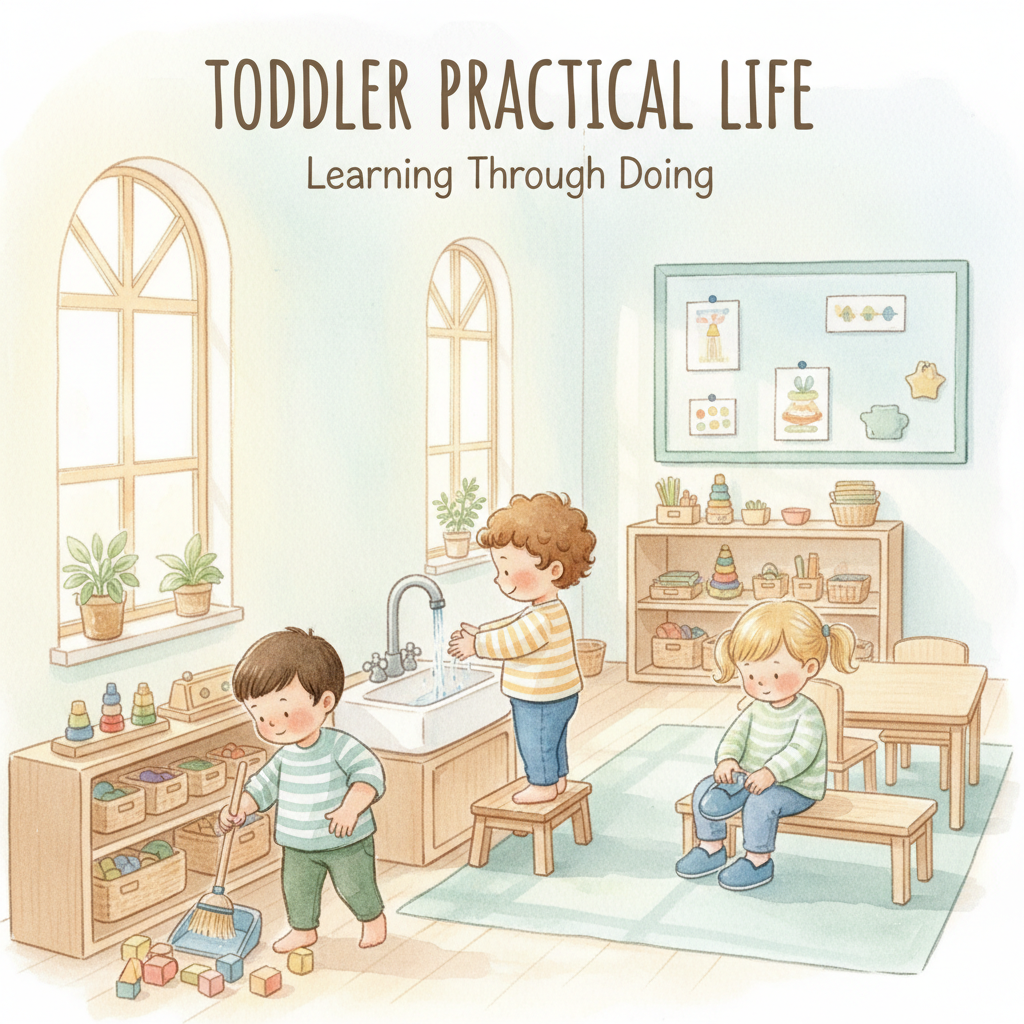
What is your toddler's talent? Discovering it starts with giving them the freedom to master real-world skills. Early Practical Life activities for toddlers are a wonderful stepping stone for further learning. A child learns to master his or her environment by developing skills for independence, and mastery of these skills paves the way to intellectual learning. Completion of practical life skills seems to ignite a longing for intellectual discovery in young children.
Free Printouts for Toddler Activities
- Sorting Smallest to Largest Hands-On Activity
- More Sorting and Matching Printouts
- Memory Matching Game Download
- Size Board Printout (Part 1) | Part 2
- Size Cards Printout (Part 1) | Part 2
- Gradation Cutout Cards
- Memory Game Printout (Part 1) | Part 2
Maria Montessori on Practical Life
"But the children seemed to demand some conclusion of the exercises, which had already developed them intellectually in a most surprising way. They knew how to dress and undress, and to bathe themselves; they knew how to sweep the floors, dust the furniture, put the room in order, to open and close boxes, to manage the keys in the various locks; they could replace the objects in the cupboards in perfect order, could care for the plants; they knew how to observe things, and how to see objects with their hands. A number of them came to us and frankly demanded to be taught to read and write. Even in the face of our refusal several children came to school and proudly showed us that they knew how to make an O on the blackboard."
— Maria Montessori, The Montessori Method
Personal Care & Self-Sufficiency
These are the foundational skills that give toddlers a sense of autonomy and confidence. Present each activity with a slow, deliberate demonstration and allow your child to practice independently.
- Washing hands — Show your child each step: rolling up sleeves, wetting hands, applying soap, scrubbing, rinsing, and drying.
- Toilet training — Including how to use the toilet, wipe, and flush independently.
- Brushing teeth — Use a child-sized toothbrush and demonstrate the motion.
- Washing face — Provide a small washcloth at the child's level.
- Blowing nose — Demonstrate how to blow gently and throw away the tissue.
- Using a napkin — Place on lap, dab mouth with corner of napkin, and place napkin beside plate when excused.
Dressing Skills
Dressing frames are a classic Montessori material that isolate each fastening skill. At home, you can also practice with your child's own clothing.
- Putting on clothes — Underwear, socks, pants, tops, and jackets.
- Putting on shoes
- Dressing oneself — Allow extra time so your child can practice.
- Putting on a coat — The Montessori "flip" method works wonderfully: place the coat on the floor with the collar at the child's feet, slide arms in, and flip over the head.
- Buttoning — Start with large buttons first. You can make a button bracelet for practice!
- Zipping — Start with something easy like a purse or backpack, then progress to jacket zippers.
- Velcro fasteners
- Snaps
- Untying
A set of Montessori dressing frames is a worthwhile investment for practicing these skills in isolation.
Food Preparation & Mealtime
Toddlers love being involved in the kitchen. These activities build fine motor skills, sequencing, and concentration.
- Feeding self and using silverware — Progress from spoon to fork to knife.
- Setting the table — Use a placemat with outlines showing where each item goes.
- Serving self at snacks or meals
- Table manners — Model polite phrases and waiting patiently.
- Helping with cooking
- Cutting bread — Use a child-safe serrated knife.
- Peeling a banana
- Cutting a banana — A butter knife or child-safe knife works well.
- Cutting an apple — With close supervision and an apple slicer.
- Peeling a carrot — Use a child-sized vegetable peeler.
- Cracking nuts
Pouring & Transferring
These classic Montessori pouring activities develop hand-eye coordination, concentration, and prepare the hand for writing.
- Dry pouring — Pour beans, rice, or salt from one pitcher to another.
- Pouring liquids — Pour clear water from one small pitcher to another.
- Pouring water into a funnel
- Sponge transfer — Squeeze water from a sponge to transfer liquid from bowl to bowl.
- Transferring with hands — Moving dry materials from one bowl to another using hands is a great starting point.
- Scooping — Scoop beans or pasta from one container to another. Start with a sand shovel and progress to smaller scoops.
- Spooning — Use a spoon to transfer beans, rice, or salt between containers.
- Using tongs — Transfer pom poms, small balls, or cotton balls from one container to another using various shaped tongs.
- Sorting and transferring beans
- Using a turkey baster — Tip: Cut about 1/3 off the tube to make it easier for small hands.
- Using an eye dropper — Transfer water one drop at a time into small indentations.
- Color mixing with eye dropper — Mix the 3 primary colors using droppers.
- Using an egg beater — Whip water with a little dish soap to make bubbles. The gears are fascinating!
A Montessori pouring and transfer set provides child-sized pitchers and tools perfectly suited for little hands.
Care of the Environment
Caring for their surroundings gives toddlers a deep sense of belonging and responsibility. These activities connect directly to the broader practical life curriculum.
- Putting away materials on low shelves
- Hanging up clothes or putting them in drawers
- Folding clothes — Start with a small towel folded in half.
- Unfolding
- Rolling up a rug and putting it away
- Cleaning up spills
- Squeezing a sponge from a spill into a bucket
- Sweeping — Use a child-sized broom.
- Dusting
- Carpet sweeping
- Table washing
- Washing dishes
- Watering plants — Use a small watering can.
- Gardening and planting seeds
- Helping feed pets
- Carrying objects correctly and carefully
- Carrying a chair properly and quietly
- Carrying items on a tray
Fine Motor & Hand Skills
These activities directly prepare the hand for writing while building concentration and independence.
- Screwing and unscrewing lids on different size jars
- Using clothespins or pegs
- Stringing or stacking large wooden beads
- Large nuts and bolts — Threading and unthreading
- Stickers
- Stamps
- Unwinding and winding yarn
- Tearing tissue paper — Clip a starting point or crease the paper to make it easier.
- Using scissors — Start with safety scissors and fringing paper.
- Cutting — Progress to more advanced cutting activities.
- Gluing shapes or forms onto paper
- Working with clay
- Locks frame — Practicing turning keys in various locks.
A Montessori practical life materials set with child-sized tools makes setup easy.
Gross Motor & Movement
Physical development is essential in Montessori education. These activities build large muscle skills and introduce concepts like gravity, balance, and spatial awareness.
- Crawling up and down stairs
- Walking up and down stairs
- Playground equipment — Develops large muscle skills and concepts such as gravity, balance, and general physics.
- Climbing and balancing
- Going on daily walks
- Walking the line — A foundational Montessori movement exercise.
- Beginning line exercises
- Sand play
- Water play — And cleaning up water play!
Art, Music & Sensorial Exploration
- Drawing with crayons, pencils, and colored pencils
- Sponge painting
- Rubbings — Take the paper off crayons, lay paper over a textured surface (like a plastic doily), and rub with the side of the crayon. Tape layers down to keep them secure.
- Playing musical instruments
- Clapping rhythms
- Collecting natural objects — Shells, pebbles, nuts, leaves, pinecones, etc.
- Matching fabric textures
- Touch and feel bags — A mystery bag filled with objects for the child to identify by touch.
- Make touch and feel books
Early Cognitive & Language Activities
- Choosing work independently
- Matching animals to nomenclature cards
- Puzzles — Start with single-piece knobbed puzzles.
- Learning colors — Use Montessori color tablets or colored spools.
- Matching and sorting
- Stacking tower rings
- Stacking blocks — Built-in control of error: the blocks fall down!
- Counting
- Learning letter sounds with sandpaper letters
- Books and reading aloud
- Make finger puppets
- Make a picture dictionary
- Signing — Baby sign language supports communication before verbal language develops.
Grace, Courtesy & Cultural Activities
Even toddlers can begin learning the social graces that are central to Montessori education, including the beautiful Silence Game.
- Celebrate cultural events — Expose your child to diverse traditions and celebrations.
- Montessori birthday celebration — The birthday child holds a globe and walks around a candle (representing the sun) once for each year of life. Everyone claps the number of times matching the child's age.
- Basket or box of goodies — A treasure basket for exploratory play.
- Toddler handbag fun — Fill a small bag with interesting objects to explore.
- Montessori home environment — Create a prepared environment with child-sized furniture and a floor bed.
Recommended Montessori Materials for Toddlers
Having the right materials makes all the difference. Here are some essentials:
- Montessori Practical Life Set — Child-sized tools for pouring, scooping, and transferring.
- Dressing Frames — For practicing buttoning, zipping, snapping, and tying.
- Sandpaper Letters — For learning letter sounds through touch.
- Color Tablets — For learning and matching colors.
- Child-Sized Cleaning Set — Broom, mop, dustpan, and duster.
Related Articles
- Practical Life Activities for Toddlers
- Early Practical Life
- Practical Life Activities
- Lesson of the Day: Pouring Activities
- Lesson of the Day: Dressing Frames
- Lesson of the Day: Table Washing
- Lesson of the Day: Walking the Line
- Lesson of the Day: The Silence Game
- Montessori Baby — From Birth to 12 Months