The Silence Game
Published on: March 20, 2026
The Silence Game
Ages
2½ to 6 years old
About the Silence Game
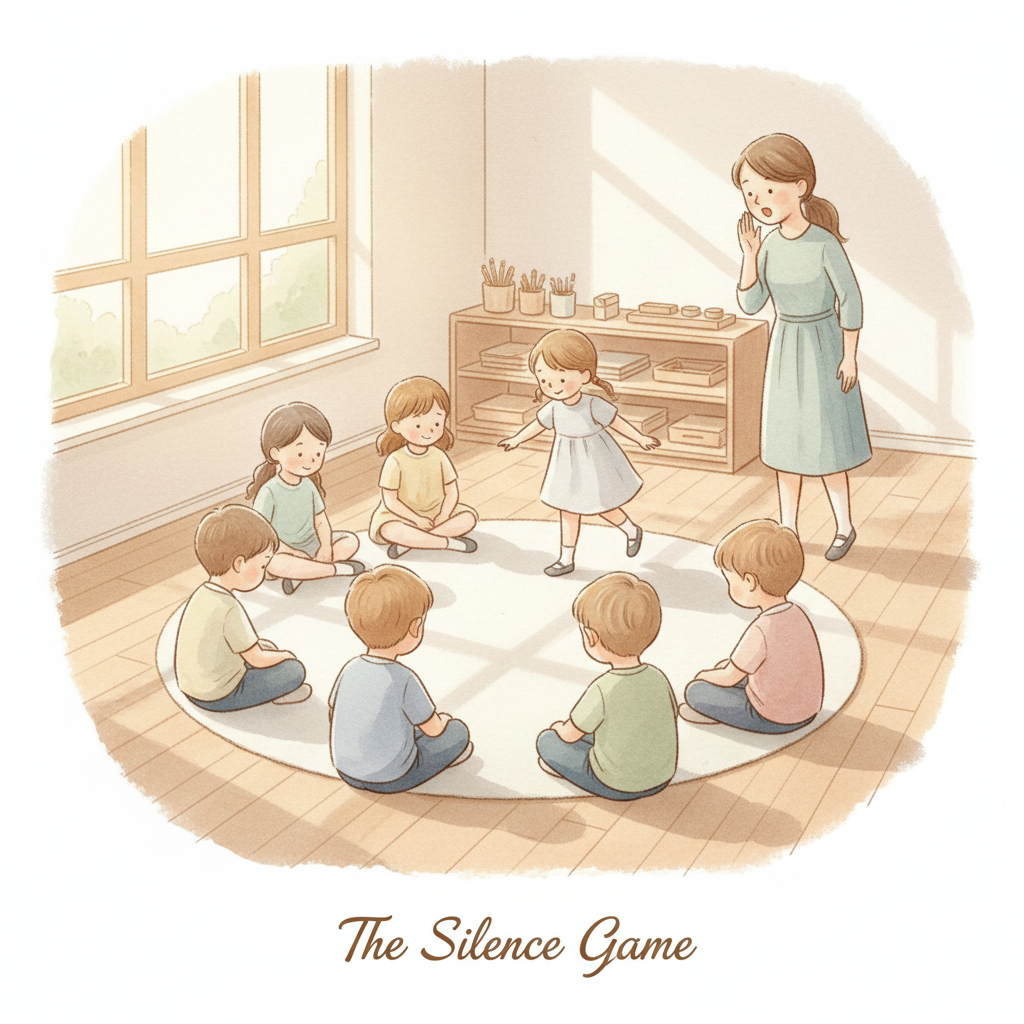
The Silence Game is one of the most beloved exercises in the Montessori classroom. It is not a punishment or a demand for quiet — it is an invitation. Children are asked to make themselves as still and silent as possible, and in doing so, they discover a deep sense of calm, self-control, and awareness of the sounds around them. Maria Montessori observed that young children are truly capable of extraordinary stillness when they choose it freely, and the experience fills them with joy and pride.
Materials
- A quiet space where children can sit comfortably in a circle or at their seats
- A small bell, chime, or soft instrument (optional, to signal the beginning and end)
- A card or sign with the word "SILENCE" written on it (optional, for older children)
Preparation
Choose a time when the children are calm and receptive — not when they are overly excited or restless. The Silence Game works best when introduced gently, almost as a gift. You might dim the lights slightly or speak in a soft, inviting tone. Make sure the environment is as free from outside noise as possible.
Presentation
- Gather the children together and tell them you are going to play a special game — the Silence Game.
- Explain that everyone will try to be as perfectly still and silent as they can. No talking, no moving, no sounds at all.
- Show them how you become still: close your eyes, relax your hands in your lap, and breathe quietly.
- Ring a small bell or chime to signal the beginning of silence.
- Sit together in silence for a short time — even 30 seconds is wonderful for young children.
- After a moment, whisper each child's name, one at a time. When a child hears his or her name, that child may rise quietly and come to you.
- Ring the bell again softly to end the game.
Exercise
- Begin with very short periods of silence and gradually lengthen them as the children develop their ability to be still.
- After the silence, invite the children to share what they heard — a bird outside, a clock ticking, their own breathing.
- For older children, you can hold up the "SILENCE" card to signal the game instead of using words.
- Variations include:
- Whispering each child's name from across the room so they must listen carefully
- Having children walk silently to a designated spot when their name is called
- Playing the game outdoors and noticing nature sounds
Purpose
- Develop self-control and the ability to inhibit movement voluntarily
- Heighten awareness of sound and the auditory sense
- Build concentration and inner discipline
- Foster a sense of community — the children work together to create silence
- Cultivate peace and calm in the classroom environment
- Prepare the child for focused, attentive work
Tips
Never force the Silence Game. If a child is not ready, allow him or her to observe. The magic of this exercise is that children genuinely want to participate once they see how peaceful and rewarding it feels. Keep it brief at first — success breeds enthusiasm. You'll find that children will begin to request the Silence Game themselves, which is one of the most beautiful moments in a Montessori classroom.
At home, this is a lovely activity before a meal, before a story, or any time you and your child need a moment of calm together.
Recommended Materials
A gentle bell or chime adds a lovely ritual quality to the Silence Game. Here are two good options:
- Montessori Hand Bell with Wooden Handle — A clear-toned hand bell perfect for signaling the start and end of the Silence Game
- Hand Chimes for Classroom / Meditation Chimes — Soft, soothing chimes ideal for creating a peaceful atmosphere during the Silence Game