Presenting Materials
Published on: June 11, 2012
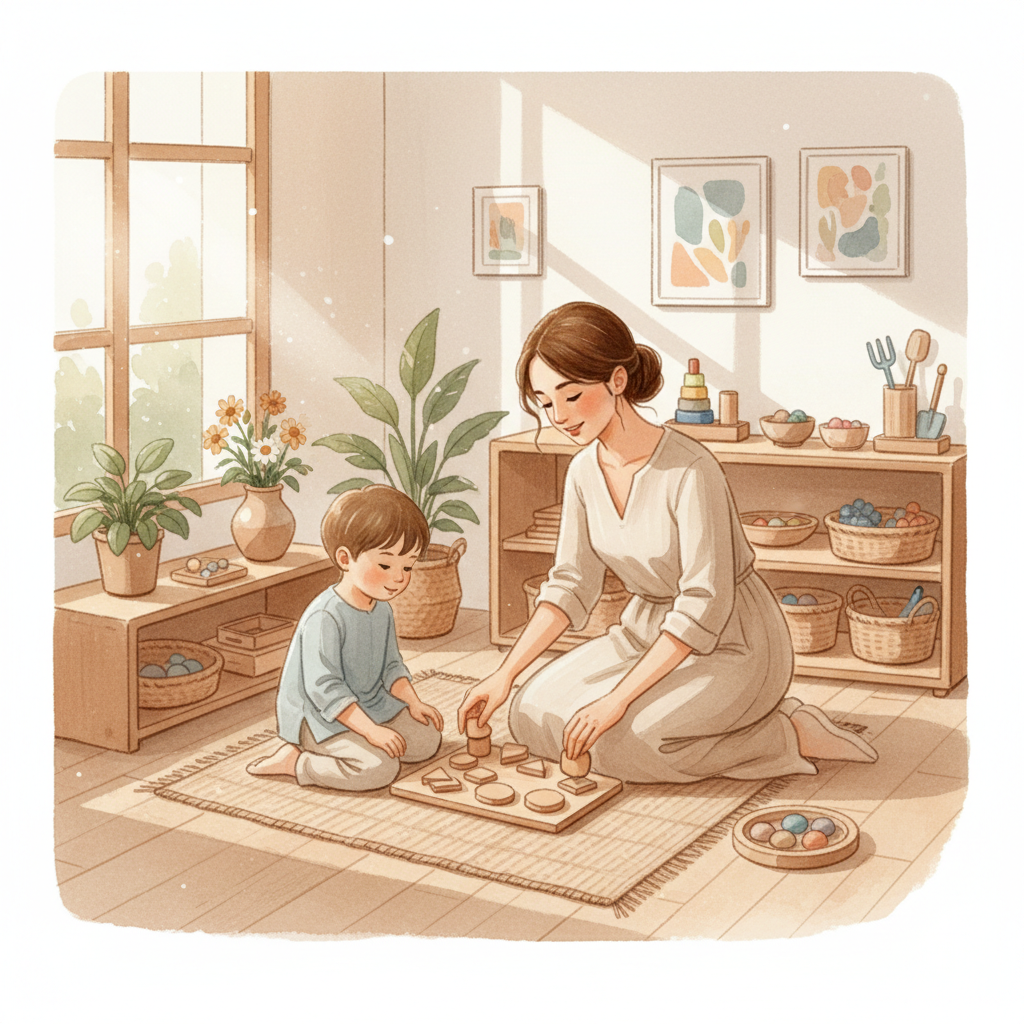
Presenting Materials: The Montessori Art of the First Impression
In the Montessori classroom and home, the way we introduce a material to a child matters profoundly. Dr. Maria Montessori understood that children absorb information with extraordinary clarity during their first encounter. This is why one of the most important principles is “No ReDos” — presenting materials correctly the very first time.
Think of it this way: your child’s mind is like wet cement during that first presentation. Every movement you make, every word you speak (or wisely choose not to speak), leaves an imprint. When we rush, over-explain, or fumble through a presentation, those imperfections become part of what the child absorbs. But when we present with slow, deliberate, beautiful precision, we give our children a gift — a clear mental map they can return to again and again as they practice independently.
Why the First Presentation Matters So Much
Dr. Montessori observed that children have what she called the absorbent mind — a remarkable capacity to take in sensory information from their environment without conscious effort. During a material presentation, your child isn’t just learning how to use an object. They’re absorbing the order of the steps, the grace of your movements, the care with which you handle each piece, and the sense of reverence you bring to the work. This is why preparation and practice on your part are so essential. Before you ever sit down with your child, you should have rehearsed the presentation multiple times until your hands move with confidence and fluidity.
Step-by-Step: Presenting the Pink Tower
The Pink Tower is one of the most iconic Sensorial Materials in Montessori education, and presenting it beautifully is a wonderful place to begin your journey. Here’s how to do it thoughtfully with a quality Montessori Pink Tower set:
- Invite your child: Gently say, “I have something to show you. Would you like to come with me?” Walk together to the shelf where the Pink Tower is stored.
- Carry the cubes one at a time: Begin with the largest cube. Carry each cube with both hands to a mat on the floor, making separate trips. This builds anticipation and shows your child that each piece deserves care and attention.
- Build in silence: Once all ten cubes are on the mat, begin building. Pick up the largest cube and place it down deliberately. Then find the next largest, comparing if needed by placing cubes side by side. Stack each one with slow, precise movements. Use as few words as possible — ideally none at all during the building. Let your hands do the teaching.
- Pause and admire: When the tower is complete, sit back for a moment. Let your child take it in. A small smile is enough.
- Disassemble and invite: Carefully take the tower apart and return the cubes to a scattered arrangement on the mat. Then say simply, “Now it’s your turn,” or “Would you like to try?”
Step-by-Step: Presenting a Pouring Activity
Practical Life activities are often the first materials young children encounter, and pouring is a foundational exercise that builds concentration, coordination, and independence. Setting up a dedicated practical life tray keeps the activity organized and beautiful, which naturally invites your child to participate.
- Prepare the tray: Place two small, identical pitchers on the tray — one filled with dry rice or beans, the other empty. A small sponge can sit between them for cleanup.
- Carry the tray together: Show your child how to carry the tray with two hands to the table. Walk slowly and steadily.
- Demonstrate slowly: Sit beside your child (on their dominant side so they have a clear view). Pick up the full pitcher with your dominant hand, steady the empty pitcher with the other, and pour slowly and deliberately. Pause when finished. Then pour back into the original pitcher.
- Show cleanup: If any grains spill, calmly pick up the sponge and wipe them into your hand. Place them back in the pitcher. This teaches your child that mistakes are simply part of the process — and that every activity includes tidying up.
- Step back: Offer the tray to your child and move slightly away. Resist every urge to guide their hands or narrate what they’re doing.
Common Mistakes Parents Make When Presenting Materials
Even the most well-intentioned parents can fall into habits that undermine a presentation. Here are the most common pitfalls to watch for:
- Talking too much: This is the number one mistake. When you narrate every step — “Now I’m picking up the big cube, and I’m going to put it right here” — you split your child’s attention between your words and your actions. Children learn movement through observation, not verbal instruction. Save language lessons for The Three Period Lesson, which is specifically designed for introducing vocabulary at the right time.
- Moving too quickly: Your adult pace feels natural to you, but it’s far too fast for a young child to absorb. Slow down to what feels almost comically slow. Then slow down a little more. Your child’s eyes need time to track each movement and store it in memory.
- Correcting the child during their turn: Once you’ve finished your presentation and your child begins working, your role shifts to observer. If they stack the Pink Tower cubes out of order or spill rice everywhere, resist the urge to step in. The material itself is designed to be self-correcting — your child will notice that a larger cube doesn’t balance on a smaller one. Trust the process.
- Skipping practice beforehand: If you haven’t rehearsed the presentation privately, you may hesitate, backtrack, or fumble. Your child will absorb that uncertainty. Always practice with your hands until the sequence feels natural and graceful before inviting your child.
- Presenting too many materials at once: Enthusiasm is wonderful, but overwhelming your child with multiple new activities in one sitting leads to shallow engagement rather than deep concentration. Present one material, then wait. Let your child return to it repeatedly over days or weeks before introducing something new, like the Knobbed Cylinders.
The Beautiful Discipline of Stepping Back
Perhaps the most challenging part of presenting materials isn’t the presentation itself — it’s what comes after. Once your child takes over, your job is to become still, quiet, and present. You are not a teacher in that moment; you are a witness to your child’s unfolding capability. This requires a kind of loving restraint that doesn’t come naturally to most of us. We want to help. We want to praise. We want to fix.
But Montessori reminds us that the child’s work belongs to the child. Your beautiful, careful, well-practiced presentation gave them everything they need. Now it’s their turn to explore, make mistakes, repeat, and ultimately master the material on their own terms and in their own time.
When you honor the art of the first impression — when you slow down, prepare thoroughly, speak less, and trust more — you’re doing so much more than teaching your child how to stack cubes or pour rice. You’re communicating something deeply powerful: “I respect you. I believe in you. And I’ve taken the time to give you my very best.” That message, more than any material on any shelf, is what transforms a child’s relationship with learning.