Calendars and Clocks
Published on: April 23, 2008
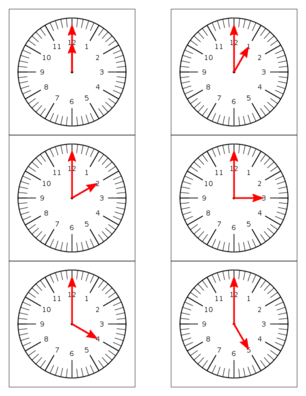
What time is it?
Astronomy was the one of the first ways early cultures marked the passage of time. People could tell by the phases of the moon that time changed. The first calendar was a lunar calendar .
A solar year is the time it takes to go from the winter equinox to the next winter equinox. Ancient people determined the equinoxes and solstices by where the sun rose in the morning. Some examples are Stone Henge, and the Mayan pyramids.
Calendars were the easiest invention to keep track of time in days, weeks, months and years. Clocks are more complicated in that they can keep track of hours, minutes and seconds.
3500 BC — the first clock was a gnomon or an obelisk. The Egyptians placed the stick vertically into the ground and when the sun hit the object it made a shadow. By measuring the different positions you could tell the time. It was like a large sundial. The sundial was even used during biblical times.
- Here are some links about ancient clocks. These are links about early clocks .
- You can see how clocks changed over time. Check out the timeline of clocks part one and part two.
- Lesson 10-Telling Time has many ideas you can use for your classroom. Make nomenclature, matching or reading cards using Name for Days of the Week chart from this lesson plan-
Names for Days of the Week
| Roman | Anglo Saxon | English | Spanish |
| Solis | Sun | Sunday | Domingo |
| Lunae | Moon | Monday | Lunes |
| Martis | Tiw | Tuesday | Martes |
| Mercurii | Woden | Wednesday | Miercoles |
| Jovis | Thor | Thursday | Jueves |
| Veneris | Freya | Friday | Viernes |
| Saturni | Saturn | Saturday | Sabad |
You can get more information for research or vocabulary root word cards for months, weeks and days of the year from this link, Meaning and History of Months and Days Names .
Activities:
Candle Clock
This needs to be done with an adult.
You'll need:
- tapered or thick candle (discount or dollar stores sell them)
- candle holder
- marker or pencil
- tape measure or ruler
- watch or timer
Directions:
- Measure the candles
- Put the candle in the candle holder
- Adult helps light the candle
- Let the candle burn for 10 minutes. Use timer or watch.
- Blow out candle, cool it for awhile and measure how much the candle burned.
- Mark the candle with lines that represent 10 minutes. To make an hour clock, multiply the measurement by 6 and mark in one hour measurements on the candle.
- Adult helps light the candle and observe how the candle helps you tell time.
Matching Clock Game
You can use the concept of time when studying the First Great Lesson , The Story of the Universe. Here is the timeline of life.
Here is a clock matching game. Use the tiles to match up with the correct clock. You can also use these cards to make a bingo game . ( DLTK has directions, markers and everything you need to play bingo.)